Showing posts with label Oral Health Care. Show all posts

Tuesday, 17 December 2013

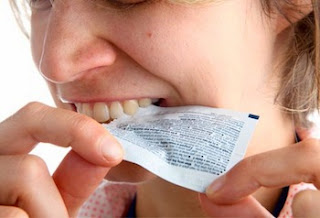
Habits That Wreck Your Teeth: Opening Stuff With Your Teeth


Opening bottle caps or plastic packaging with your teeth may be convenient, but this is one habit that makes dentists cringe. Using your teeth as tools can cause them to crack or chip. Instead, keep scissors and bottle openers handy. Bottom line, your teeth should only be used for eating.

Above article from: webmd.com/oral-health

 
Dentist - Six Month Smiles Dallas TX
Energy Square Dental
Bill Blandford, DDS, PC

(214) 369-99664849 
Greenville, Suite 173, Dallas, TX 75206


Sunday, 15 December 2013

Habits that Wreck Your Teeth: Cough Drops


Just because cough drops are sold in the medicine aisle doesn't mean they’re healthy. Most are loaded with sugar. So after soothing your throat with a lozenge, be sure to brush well. Whether the sugar comes from a cough drop or a hard candy, it reacts with the sticky plaque that coats your teeth. Then bacteria in the plaque convert the sugar into an acid that eats away at tooth enamel. Hello, cavities.

Above article from: webmd.com/oral-health

Dentist - Six Month Smiles Dallas TX
Energy Square Dental
Bill Blandford, DDS, PC

(214) 369-99664849 
Greenville, Suite 173, Dallas, TX 75206

Tuesday, 18 December 2012

Sports Drinks - Things That Can Ruin Your Smile


In the last decade, sports beverages have become increasingly popular, but they aren't great for your teeth.
"Scientific research has found that the pH levels in many sports drinks could lead to tooth erosion due to their high concentration of acidic components, which could wear away at the tooth's enamel," says David F. Halpern, DMD, FAGD, president of the Academy of General Dentistry.
Additionally, these drinks are often high in sugars that act as "food" for acid-producing bacteria, which then sneak into the cracks and crevices in your teeth, causing cavities and tooth decay.

Above article by: Kristin Koch, Health.com

Dentist - Preventive Dental Care Dallas TX
Energy Square Dental
Bill Blandford, DDS, PC

(214) 369-9966
4849 Greenville, Suite 173 • Dallas, TX 75206

Friday, 16 November 2012

Bleeding gums


Bleeding gums can be a sign that you are at risk for, or already have, gum disease. However, persistent gum bleeding may be due to serious medical conditions such as leukemia and bleeding and platelet disorders.

Considerations

It is important to follow the instructions from your dentist in order to maintain healthy gums. Improper brushing and flossing technique may actually irritate or traumatize the gum tissue.

Causes

Bleeding gums are mainly due to inadequate plaque removal from the teeth at the gum line. This will lead to a condition called gingivitis, or inflamed gums.

If plaque is not removed through regular brushing and dental appointments, it will harden into what is known as tartar. Ultimately, this will lead to increased bleeding and a more advanced form of gum and jawbone disease known as periodontitis.

Other causes of bleeding gums include:


Home Care

Visit the dentist at least once every 6 months for plaque removal. Follow your dentist's home care instructions.

You should brush your teeth gently with a soft-bristle toothbrush after every meal. The dentist may recommend rinsing with salt water or hydrogen peroxide and water. Avoid using commercial, alcohol-containing mouthwashes, which aggravate the problem.

Flossing teeth twice a day can prevent plaque from building up. Avoiding snacking between meals and reducing carbohydrates can also help. Follow a balanced, healthy diet.

Other tips:

  • Avoid the use of tobacco, which aggravates bleeding gums.
  • Control gum bleeding by applying pressure directly on the gums with a gauze pad soaked in ice water.
  • If you have been diagnosed with a vitamin deficiency, take recommended vitamin supplements.
  • Avoid aspirin unless your health care provider has recommended that you take it.
  • If side effects of medication are irritating, ask your doctor to recommend another medication. Never change your medication without consulting your doctor.
  • Use an oral irrigation device on the low setting to massage the gums.
  • See your dentist if your dentures do not fit correctly or if they are causing sore spots in your gums.

Above article from: www.nim.nih.gov

Dentist - Preventive Dental Care Dallas TX
Energy Square Dental
Bill Blandford, DDS, PC

(214) 369-9966
4849 Greenville, Suite 173 • Dallas, TX 75206

Tuesday, 16 October 2012

Diet and Oral Health


Cut the sugar, grab the milk!

Each time you eat a snack containing sugar or starch (carbohydrates), the resulting acid attack on your teeth can last up to 20 minutes, and a lot of snacks and drinks contain sugar. How much sugar? A single can of pop contains up to 10 teaspoons of sugar, and if you think that natural sugar (like the sugar in raisins or other fruit) is better for your teeth it’s not. Sugar is sugar, and the average Canadian consumes over 40 kilograms of sugar each year! Click here for a list of how much sugar your favorite snack might contain.

How can you defeat the sugar bug?


Beat the Clock - foods that are eaten during a meal usually pose less of a threat to teeth because of the additional saliva produced during mealtime eating. Saliva helps to wash food particles from your mouth and lessen the damage from acid.


Brush & floss those teeth - toothbrushing is important, and you should brush twice a day. Did you know that if you don’t floss, you miss cleaning up to 35% of each tooth? If you’re not sure how to floss, just ask your dentist.


Stock up on Dairy Products - yogurt and cheese, milk and milk products contain things that are good for your teeth. Everything that’s made from milk is a good source of calcium - an essential nutrient for the development of bones and teeth. Some scientific studies have shown that eating cheese might actually help to protect your teeth from cavities by preventing something called demineralization (the loss of important calcium in your teeth).


Above article from HealthTeeth.org


Dentist - Preventive Dental Care Dallas TX
Energy Square Dental
Bill Blandford, DDS, PC

(214) 369-9966
4849 Greenville, Suite 173 • Dallas, TX 75206

Monday, 3 September 2012

Dental X-rays


Dental X-rays remain a valuable tool in detecting oral health problems

A study published in Cancer, the peer-viewed journal of the American Cancer Society, found that people diagnosed with meningioma, a generally non-cancerous tumor, are more likely to report that they’ve received certain types of dental X-rays in the past. 

There are several important things to understand about this study:

  • This finding doesn’t mean that dental X-rays cause these tumors; much more research is needed.
  • The results rely on the individuals’ memories of having dental X-rays taken years earlier. The ability to recall information is often imperfect. Therefore, the results of studies that use this design can be unreliable because they are affected by what scientists call “recall bias.”
  • The study acknowledges that some of the subjects received dental X-rays decades ago when radiation exposure was greater. Radiation doses were higher in the past due to the use of old X-ray technology and slower speed film.
The American Dental Association's long-standing position is that dentists should order dental X-rays for patients only when necessary for diagnosis and treatment. Since 1989, the ADA has published recommendations to help dentists ensure that radiation exposure is as low as reasonably achievable. As precautions against radiation, ADA encourages the use of abdominal shielding (e.g., protective aprons) and thyroid collars on all patients. In addition, the ADA recommends that dentists use E or F speed film, the two fastest film speeds available, or a digital X -ray.

Dental X-rays are a valuable part of detecting oral health problems at an early stage. Many oral diseases can’t be detected with a physical examination alone. Dental X-rays help provide information about a patient’s oral health such as early-stage cavities, gum diseases, infections and some types of tumors. 

How often dental X-rays should be taken depends on the patient’s oral health condition, age, risk for disease and any signs and symptoms of oral disease that the patient might be experiencing. If you have concerns the ADA encourages you to talk to your dentist, but eliminating X-rays altogether could be detrimental to your oral health.


Above article from mouthhealthy.org


Energy Square Dental
Bill Blandford, DDS, PC
Telephone: (214) 369-9966
4849 Greenville, Suite 173
Dallas, TX 75206